Garden Maintenance in Kings Cross

Garden maintenance in Kings Cross is about keeping external spaces neat, healthy and workable through the seasons. We focus on routine care that helps beds, lawns, hedges and planted areas stay tidy, balanced and manageable, whether the space is a compact courtyard, a shared forecourt or a more established domestic garden. The aim is practical upkeep rather than dramatic change, with each visit shaped around the condition of the site and the work needed.
Our maintenance approach can include mowing, edging, pruning, clearing, weeding and general tidying, alongside seasonal tasks that help planting recover and continue growing well. Regular attention is often more effective than occasional heavy work, especially where borders, hedges and grass areas need consistent control. If you are planning work across different parts of the garden, it can help to group the priority tasks together so the visit is focused and efficient.
For a clearer view of what we offer, you can start with the core maintenance services and build from there. Some customers need a one-off refresh after a period of neglect, while others want continuing care at sensible intervals. If you already know the main jobs you want handled, send a short outline and request a quotation. If not, a brief conversation can still help define the right level of maintenance.
Routine Garden Care
Routine garden care is the foundation of most maintenance work. It usually includes the regular jobs that stop a space from becoming overgrown or uneven, such as grass cutting, trimming back soft growth, clearing leaves and removing obvious weeds. These tasks are not just cosmetic: they also help keep pathways, borders and lawn edges easier to manage, and they reduce the build-up of clutter that can make future work slower.
We can tailor routine care to suit different types of outdoor space, from simple front gardens to layered planting schemes with shrubs and seasonal colour. Where a garden contains both hard surfaces and planting, it often makes sense to treat them as connected parts of the same plan. That can mean keeping paving edges clean, removing debris from beds and making sure the overall finish looks orderly rather than patchy. If you need an initial estimate, a short note about the size and condition of the space is a good place to begin.
Garden maintenance services are usually easiest to plan when the main priorities are clear. A customer may want a tidy-up before a property changeover, a refresh after winter, or a standing arrangement for the growing season. In each case, the scope should match the garden itself rather than forcing unnecessary work into the visit. Keep it simple and ask for a quotation when you are ready.
Lawn Cutting and Edge Control
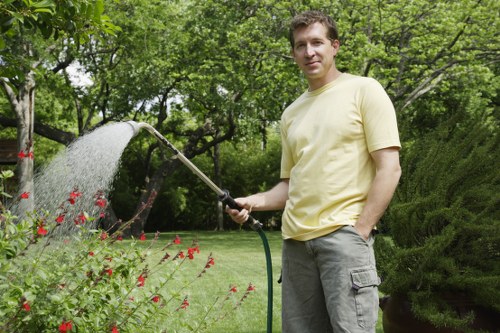
Lawn cutting and edge control are central parts of many maintenance visits because they shape the overall look of the garden quickly. A well-cut lawn can make the whole space feel more orderly, while neat edges help define beds, paths and borders. We pay attention to the finish as well as the cut, so the grass does not look neglected at the margins or uneven where different surfaces meet.
Some lawns need straightforward mowing, while others benefit from a slightly fuller service that includes strimming difficult sections, tidying around fixed features and sharpening the outline of the grass. Uneven growth, damp patches and narrow access can all affect how the work is approached, so it is useful to note any areas that are awkward to reach. If there are specific limits, such as delicate planting or newly turfed sections, that should be mentioned at the quotation stage.
Lawn mowing can be combined with broader garden upkeep so the finished result feels joined up rather than piecemeal. That may involve cutting the grass, tidying edges and then clearing away the clippings and loose debris that remain. A tidy lawn also makes it easier to judge what else needs attention in the rest of the garden. When you are ready, ask for a quotation based on the lawn size and the level of detail you want.
Hedge Trimming and Shrub Shaping
Hedges and shrubs respond best to careful, regular shaping rather than irregular heavy cutting. Trimming helps maintain height, width and outline, while also reducing the chance that dense growth will start to dominate a boundary or obscure light. In maintenance work, the emphasis is on control and presentation, with cuts chosen to suit the plant type and the look of the garden as a whole.
Some hedges need simple face and top trimming; others need a more selective approach to keep them balanced without stripping away too much growth. Shrubs may also need dead or awkward branches removed so the plant keeps a better shape and the garden stays accessible. If a hedge sits close to a path, fence or neighbouring boundary, the finish needs to be sensible as well as neat. It is worth flagging any height restrictions, tight access or nearby surfaces when asking for a quotation.
We can include hedge trimming as part of broader maintenance or as a more focused visit where the hedges are the main priority. If your garden has mixed planting, the benefit is often in combining shape, clearance and tidy-up work so the result looks consistent. The work should always suit the condition of the plants rather than follow a rigid pattern. For the next step, request a quotation with a short description of the hedge lengths and overall condition.
Clearance Work for Overgrown Areas

Some gardens need more than routine upkeep and benefit from clearance work before normal maintenance can begin. That might involve cutting back overgrown growth, removing accumulated waste, opening up blocked corners or making neglected areas manageable again. Clearance is useful where a space has become difficult to access or where a previous lack of attention has left the garden untidy and congested.
Clearance work is often best handled as a first stage, with the garden then moving into a routine maintenance pattern once the main build-up has been dealt with. Depending on the site, the work may include green waste removal, pruning back excessive growth and sorting through different parts of the garden in a practical order. Garden clearance can also help reveal what the space actually needs next, rather than guessing at the scale of the job from a distance. If you are unsure how much work is involved, a quotation request can be based on photographs and a brief description.
Where clearance is needed, it is important to be realistic about what the garden can look like in one visit. Thick growth, tangled borders and hidden features sometimes require a staged approach, especially if the site contains fragile plants or awkward access points. The goal is to restore usability and make further upkeep straightforward, not to force every area into a finished state immediately. A clear summary of the area affected will help shape the quotation.
Plant Bed Tidying and Weeding
Plant beds often reveal whether a garden has been maintained consistently. Weeding, debris removal and light tidying all help beds look cared for without disturbing the planting structure. This kind of work is especially useful where shrubs, perennials and seasonal planting share the same space and need a neat frame around them. The aim is to improve definition and reduce competition from unwanted growth.
Weeding can be more than a quick surface pass. Some weeds are easy to remove, while others take root deeply or appear repeatedly along edges, paving joints and fence lines. A sensible maintenance visit will focus on the areas where weeds most affect appearance or plant health. It may also include clearing fallen leaves, removing old stems and shaping the edge between bed and lawn so the boundary stays clear. If there are specific problem areas, mention them when you ask for a quotation.
Landscape gardening is a useful next step when beds need more considered reshaping as part of a wider maintenance plan. Sometimes a garden needs structural adjustment rather than only routine tidying, and the right work can make future maintenance simpler. Where the planting is already established, careful cleaning around the base of shrubs and borders can make an immediate difference. A short note about the bed size and condition is often enough to begin.
Seasonal Upkeep and Garden Preparation

Seasonal upkeep keeps a garden moving smoothly through changing weather and growth patterns. In practical terms, this may involve cutting back tired growth, clearing fallen material, checking the neatness of lawns and borders, and tidying areas that look fuller or less controlled at certain times of year. Seasonal work helps the garden stay presentable without waiting until it becomes heavily overgrown or cluttered.
Preparation tasks are often useful before events, property sales, tenancy changes or simply the start of a new growing period. They can include making the whole space look more settled, removing obvious clutter and dealing with the jobs that will otherwise build up later. If the garden has both ornamental and functional areas, those parts can be dealt with in a sensible order rather than treated separately. For many customers, the easiest way to proceed is to describe the current state of the garden and ask what level of maintenance would be suitable.
Our services overview can help when you are trying to decide whether your garden needs a routine visit, clearance, hedge work or a combination of tasks. That is often useful when the condition of the site is mixed and not every area needs the same treatment. A concise enquiry with a few practical details is enough to request a quotation and move things forward.
About Kings Cross
Kings Cross is an area in central London that has changed markedly over time, moving from an industrial and transport-focused district into a busy mixed quarter with offices, housing, retail, education and cultural venues. The name is linked to the former King’s Cross landmark at the junction of major routes, and the area remains strongly shaped by transport connections. Kings Cross and neighbouring St Pancras are served by one of London’s most significant rail hubs, with a wide network of underground, national rail and international links shaping everyday movement through the district. The rebuilding and redevelopment of the wider area has introduced new public spaces while leaving important historic structures in place, including the well-known station buildings designed in the nineteenth century. Granary Square and the restored Regent’s Canal towpath area have become central parts of the modern streetscape, offering open space beside water and a clear contrast with the dense urban grid around them. The area also sits near institutions such as the British Library, which lies to the east at St Pancras, adding to the cultural weight of the district. Former railway lands, warehouse buildings and newer developments sit side by side, so the local landscape combines Victorian infrastructure, contemporary architecture and active public realm. This mix gives Kings Cross a distinctive character: highly connected, heavily used and still visibly layered with older transport heritage and more recent urban renewal.
Garden Maintenance Plans and Regular Visits
Many customers find that maintenance works best as an ongoing plan rather than a one-off reset. Regular visits help keep growth in check, stop minor issues from becoming larger ones and make the garden easier to enjoy between visits. A plan can be shaped around grass cutting, hedge trimming, weeding, seasonal tidying or a broader list of tasks, depending on what the outdoor space needs most.
When planning repeat maintenance, it helps to think about the garden in practical sections. Lawn areas, beds, borders and boundary planting may all need different attention, and not every part of the site will need the same frequency of care. The right balance will depend on how quickly the garden grows, how much time is available and whether the aim is presentability, plant care or simple control. If the garden has awkward access, steep changes or fragile features, those details should be included in the enquiry so the quotation reflects the real work involved.
For straightforward upkeep or a more involved tidy-up, pricing and quotes is the best place to begin once you know the scope. We can then match the maintenance to the size and condition of the garden instead of guessing at a generic package. If you want to move ahead, send your details and request a quotation.
Site Access, Waste and Practical Details

Good maintenance work depends on sensible practical arrangements as much as on the gardening itself. Access to the garden, the amount of waste to be removed and the condition of paths or gates can all affect how a visit is planned. If the space is tight, shared or split across more than one level, it helps to describe that clearly so the work can be organised in the right order.
It is also useful to mention whether any cuttings, clippings or cleared material need to be taken away. Some customers want the garden left fully tidy, while others may prefer material to be stacked for their own disposal. Keeping those details clear at the quotation stage avoids confusion and makes the finished result more predictable. In addition, if the garden contains ponds, fragile ornaments or new planting, those features should be identified before work begins so they can be protected.
If you are ready to talk through the work, the simplest next step is to request a quotation. Include the main tasks, the approximate size of the garden and anything that may affect access or waste handling. A short and accurate description is usually enough to start the process and make sure the maintenance plan suits the site.
Keeping Borders, Paths and Boundaries Tidy
Well-kept borders and boundaries make a garden feel intentional rather than unfinished. That can mean trimming back growth from paths, removing stray weeds from paving edges, and keeping fence lines and wall bases free from unwanted buildup. When these areas are left unmanaged, they can make even an otherwise tidy garden appear less cared for. Small details often matter as much as the larger cuts.
This type of maintenance is often most effective when it is carried out alongside the main garden work rather than as a separate task. For example, mowing a lawn and then cleaning the edge between grass and path produces a more balanced finish than doing only one or the other. The same applies to borders, where a bit of careful tidying can sharpen the whole garden’s appearance without changing the planting itself. A brief description of the boundary areas helps us quote accurately.
Where regular upkeep is in place, the garden is easier to keep under control and less likely to need heavy corrective work later. That can be especially helpful in spaces with layered planting or several different surfaces. If you want a practical, orderly finish rather than a one-time flourish, a maintenance schedule can be built around the jobs that matter most. Contact us when you are ready to discuss the details and arrange your quotation.